The Cost of Waiting: Why “I’ll Start Investing Next Year” Is the Most Expensive Decision You’ll Make
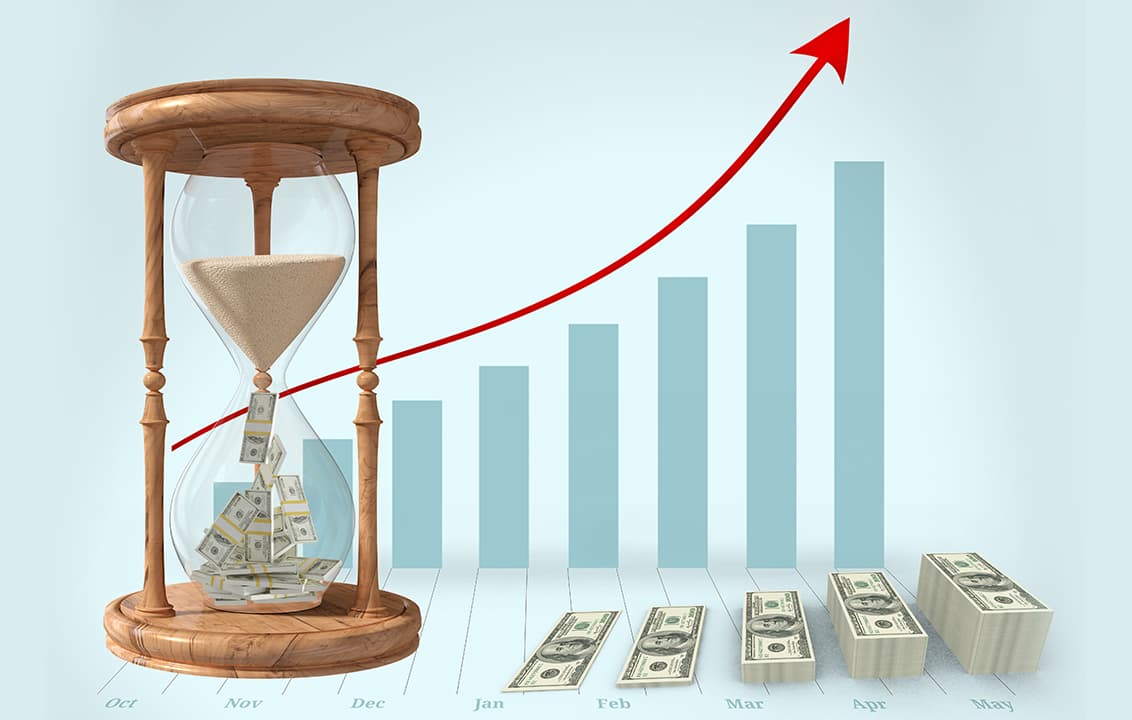
It is one of the most common conversations in financial planning. Someone knows they should be investing. They have the money. They understand the principle. But something gets in the way — the timing doesn’t feel right, the market looks uncertain, life is busy, or they simply keep putting it off.
“I’ll start next year.”
It sounds harmless. It feels responsible, even waiting until things are clearer, until there is more certainty, until the moment feels right.
But the cost of waiting is not zero. It is not even small. In many cases, it is the single most expensive financial decision a person will make and the numbers prove it in a way that is very difficult to argue with.
The S&P 500 and MSCI World: A Real-World Wake-Up Call
Let us look at what actually happened to two of the world’s most widely held indices over the past three years, because this is not a theoretical exercise. This is recent history, and many people lived through exactly this scenario.
The S&P 500, tracking 500 of the largest companies in the United States, returned 26.3% in 2023, 25.0% in 2024, and 17.9% in 2025. Three consecutive years of exceptional performance, with the index moving from around 3,840 at the start of 2023 to approximately 7,580 today. That is a gain of close to 98% in just over three years.
The MSCI World Index, which tracks large and mid-cap stocks across 23 developed countries and is the benchmark of choice for many globally diversified investors, delivered similarly strong returns across the same period, with double-digit gains in each of those three years.
Now let us look at what the decision to wait actually cost, in real money.
Example One: The Lump Sum Investor
Meet Alex. In January 2023, Alex had $300,000 sitting in cash. He knew he should invest it. He had read about index funds, understood the logic, and broadly agreed that putting the money to work in a globally diversified index tracker was the right thing to do.
But the news was full of concerns about rising interest rates, a potential recession, and global instability. Alex decided to wait. “I’ll invest when things settle down,” he told himself. “Just another year.”
Scenario A: Alex invested $300,000 in January 2023
| Year | Return | Value |
|---|---|---|
| End 2023 | 26.3% | $378,900 |
| End 2024 | 25.0% | $473,625 |
| End 2025 | 17.9% | $558,394 |
| June 2026 (approx.) | 3% | $575,146 |
Scenario B: Alex waited until January 2025
| Year | Return | Value |
|---|---|---|
| End 2025 | 17.9% | $353,700 |
| June 2026 (approx.) | 3% | $364,311 |
The cost of waiting two years: approximately $210,000.
Not a management fee. Not a tax bill. Just the compounding growth that happened without him, growth he will never recover, because those years are gone. Alex’s $300,000 did nothing while the market nearly doubled. He is now investing from the same starting point as three years ago, with the same amount of money, having missed one of the strongest sustained runs in recent market history.
Example Two: The Regular Monthly Investor
Not everyone has a lump sum. For many expats, the question is about monthly contributions- setting aside a portion of their salary each month and investing it consistently over time.
Meet Sarah. Also in January 2023, Sarah decided she would start investing $2,000 per month into a low-cost MSCI World tracker. Like Alex, she hesitated. The timing didn’t feel right. She delayed, first by a few months, then by a year, then by two.
Scenario A: Sarah invested $2,000 per month from January 2023
Over 3 years and 6 months (42 months) to June 2026, investing $2,000 per month with average annual returns broadly in line with the index, Sarah’s total contributions of $84,000 would have grown to approximately $122,000, a gain of around $38,000 on money she put in over time.
Scenario B: Sarah started in January 2025
Over 18 months to June 2026, investing $2,000 per month, Sarah’s total contributions of $36,000 would have grown to approximately $40,500.
The difference is not just the returns. It is the contributions themselves. By waiting, Sarah also missed 24 months of putting money in. She has invested less, for less time, at a lower overall cost basis, meaning the compounding engine has had far less to work with.
The Compounding Multiplier
There is a broader point that sits behind these examples, and it is the one that should stay with you.
Every year you are invested, the returns from previous years start generating their own returns. The longer the runway, the more powerful this becomes and conversely, every year you delay shortens that runway in a way that cannot be recovered.
The standard illustration is this: someone who invests $500 per month from age 25 to 65, earning an average annual return of 8%, will accumulate approximately $1.75 million. Someone who starts at 35 and makes the same contributions at the same return will accumulate approximately $745,000. Same monthly amount. Same return. A ten-year delay — less than a quarter of the investing period — results in a final pot that is less than half the size.
For expats who have access to tax-free income right now, this is not a background consideration. It is the central financial question of your time abroad.
The One Condition Worth Noting
None of this is an argument that you should invest blindly, or without a strategy, or in assets that are not appropriate for your circumstances and timeline. The S&P 500 and MSCI World are long-term vehicles, they have delivered exceptional returns over three, five, ten, and twenty-year periods, but they also fall sharply in downturns, and investors need to be able to hold through those periods without panic-selling.
The point is not that you should invest in anything. It is that having made a considered decision about what to invest in, the act of waiting for comfort, for certainty, for a better moment almost always costs more than it saves.
A Final Thought
In January 2023, the market looked uncertain. In January 2025, it looked expensive. Today, some will say it looks overextended. There will always be a reason to wait.
The best time to invest when you first had the money to do so, the second best time is today; not next year, not when things settle down, and not when it finally feels comfortable.
It never feels comfortable. That is precisely the point.
This article is for informational and educational purposes only and does not constitute financial advice. Past performance is not a guarantee of future returns. Always seek independent financial advice tailored to your personal circumstances before making investment decisions.
Enjoyed this article?
Get the next one delivered to your inbox.
Comments
Loading comments...
Related Articles
Continue reading more insights on financial planning.

Active vs. Passive: What This Year's Scorecard Really Says

Investment Risk: The Risk Of Low Returns And Falling Short Of Your Financial Goals