Considerations When Buying Property in the Middle East
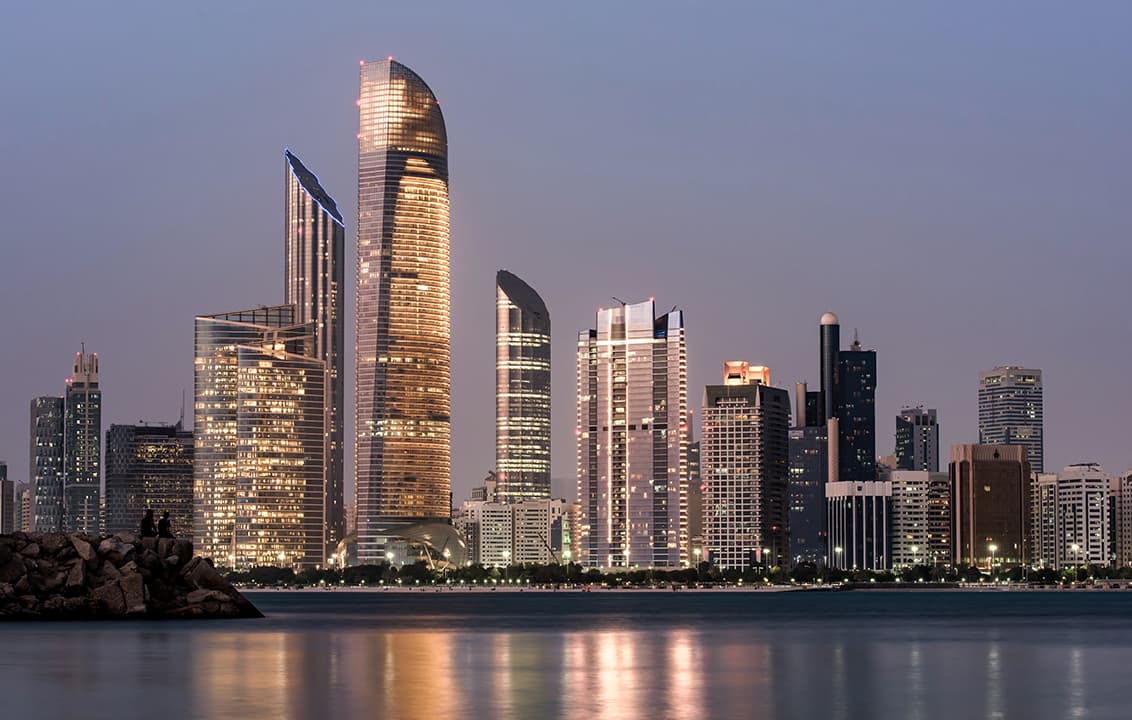
Property in the Middle East can be genuinely appealing. The tax advantages are real, the lifestyle is attractive, and the rental yields are hard to ignore. But as with any significant financial commitment, the decision deserves careful thought and there are some important factors worth understanding before you commit.
The Cost of Getting In Is Higher Than You Think
The purchase price is just the beginning. As a foreign buyer in Dubai in 2026, you face a mandatory 4% Dubai Land Department transfer fee, agency commission of around 2%, registration fees, and a range of other charges. Total transaction costs typically land between 7% and 10% of the purchase price, meaning on a AED 2 million property, you could be paying up to AED 200,000 before you have done anything with the asset.
On top of that, the UAE Central Bank requires a minimum 20% deposit for properties under AED 5 million, rising to 30–35% above that threshold. That is a significant amount of capital locked into a single illiquid asset. The market needs to rise by close to 10% before you have simply broken even.
Buyer Protections and Building Quality
Buyer protections in the Middle East, while improving, still lag behind many Western markets. Off-plan developments carry real risks: construction delays, developer insolvency, and finished buildings that do not always reflect what was originally agreed.
Building quality is also worth scrutinising. Maintenance issues in newer developments are not uncommon, and annual service charges can vary enormously from AED 3 to AED 30 per square foot depending on the development. In a climate where air conditioning runs year-round, the ongoing cost of ownership can be considerably higher than the headline figures suggest.
Your Ability to Hold the Asset Depends on Your Circumstances
In much of the Middle East, residency is tied to employment. A change in your work situation can significantly affect your timeline for remaining in the region. We have seen this play out in 2026, with many residents leaving rapidly due to geopolitical uncertainty. When you are forced to sell quickly in an uncertain market, you sell at whatever price the market offers; not the price you were hoping for. High entry costs combined with a forced exit is a difficult financial position to be in.
A Market With a History of Sharp Cycles
The data over the past 20 years paints a clear picture. During the boom of 2002 to 2008, prices surged dramatically before the global financial crisis sent them down by more than 50%. A recovery from 2011 to 2014 was followed by another downturn, with price drops of 25–33% reported in the years leading up to 2019. Then came a further dip in 2020, and the extraordinary post-pandemic rebound that drove prices up around 75% from 2021 onwards.
This is a boom-and-bust cycle that has repeated itself multiple times in two decades. Volatility ran at over 38% between 2005 and 2011, significantly higher than mature markets like London, Singapore, or Sydney. If you bought in 2008 and needed to sell in 2010, you lost half your money. Timing this market is not a strategy.
Treating Middle East property as a short-term flip carries similar risks to speculating on cryptocurrency. You are paying 7–10% just to enter the market. You need prices to rise by that amount before making any profit at all. And unlike crypto, you cannot exit in seconds, in a falling market, you are at the mercy of whatever demand exists at that moment.
The triggers for downturns, geopolitical events, oil prices, global credit conditions are largely outside anyone’s control. Short-term speculation in this environment is a high-risk position.
The Supply Dynamic
The Middle East has one of the largest land masses on the planet. Unlike London or Hong Kong, where geography constrains supply, construction across the region has been relentless. For prices to hold and grow, demand must continuously keep pace with that supply and that demand depends on the region remaining an attractive destination for international residents, business, and capital.
When supply can expand significantly and demand is discretionary, you do not have the scarcity premium that underpins property values in more constrained markets. That is a structural consideration that should inform any investment decision here.
When It Does Make Sense
This is not an argument against Middle East property in all circumstances. If you plan to live in the property long-term, or hold it as a buy-to-let over a decade or more, the picture looks considerably more positive. Rental yields in Dubai remain among the highest of any major global city, and patient long-term holders have been rewarded over time.
The history supports those who commit for the long term. It is less kind to those treating it as a short-term opportunity or anyone whose ability to hold is contingent on factors outside their control.
A Final Thought
Global equity markets do not come with a view or a lifestyle. But they have delivered consistent, compounding returns for over 100 years through wars, financial crises, pandemics, and political upheaval. They are liquid, low-cost to enter, and portable.
I would rather invest in an asset that has consistently performed for 100 years than something that is simply performing well right now.
The Middle East property market may well have a strong decade ahead. But the decision should be based on long-term intent and a clear-eyed understanding of the risks; not on recent performance alone.
This article is for informational and educational purposes only and does not constitute financial advice. Always seek independent financial advice tailored to your personal circumstances before making investment decisions.
Enjoyed this article?
Get the next one delivered to your inbox.
Comments
Loading comments...
Related Articles
Continue reading more insights on financial planning.

Active vs. Passive: What This Year's Scorecard Really Says

Investment Risk: The Risk Of Low Returns And Falling Short Of Your Financial Goals